
Differences between electric motorcycles and fuel-powered motorcycles
Electric motorcycles replace the fuel tank, engine, gearbox and exhaust with a lithium battery, brushless motor and inverter, eliminating oil changes, shifting and most noise. The low-mounted battery gives a lower center of gravity and simpler frame, while regenerative braking recovers energy. Gasoline bikes retain a four-stroke engine, multi-plate clutch and constant-mesh gearbox, needing regular oil, filter and chain maintenance; the tank and engine sit higher, producing more noise, emissions and vibration. Refueling is quick, but structure is complex.
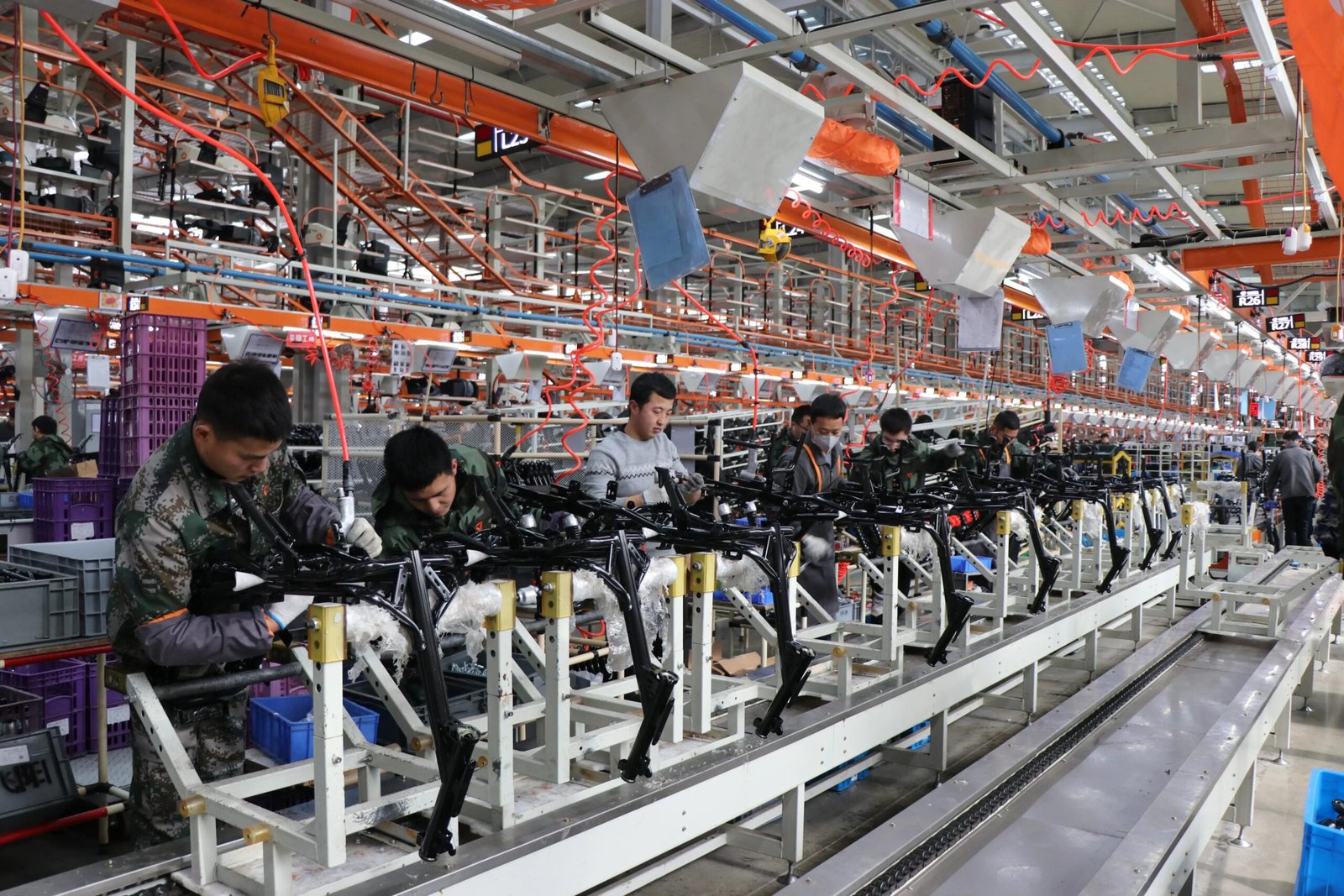
I. Structural Breakdown
- Electric Motorcycle (e-motorcycle)
① Energy container: lithium-ion battery pack, normally sealed in an aluminum or high-strength-plastic box. The whole pack is locked to the middle of the frame or under the seat bucket and can be removed as a cassette or side-sliding module.
② Prime mover: three-phase brushless hub motor (or mid motor + reduction gearbox). Stator windings, permanent-magnet rotor and Hall sensors are potted in one housing; it drives the rear wheel directly or through a belt/chain final drive.
③ Power control: three-phase inverter (controller) built with MOSFET/IGBT power stage and an MCU, performing DC→AC conversion, speed modulation and regenerative braking.
④ High-voltage distribution: battery positive runs through main relay, pre-charge resistor and fuse to the inverter; negative passes through a shunt for current sampling.
⑤ Low-voltage network: a 12 V DC-DC converter steps pack voltage down to 12 V to feed lights, meter, horn and ABS pump.
⑥ Thermal management: the battery’s aluminum base plate is bonded with thermal pads; cooling is by forced air or a cold plate. The controller shell has fins and relies on riding airflow.
⑦ Body: no fuel tank, no exhaust pipe. Frame is usually a steel-tube cradle with an integrated battery compartment, giving a low center of gravity (CG). The swing-arm may incorporate the motor.
⑧ Transmission: mostly single-speed; no clutch, no shift drum—only a final gear or belt reduction.
⑨ Brakes: conventional hydraulic discs + linked CBS or ABS; some models add E-ABS by motor reverse torque.
⑩ Electronic interface: 6-pin or 9-pin OBD port, CAN or RS485 for BMS-to-meter communication and fast-charge hand-shake. - Gasoline Motorcycle (g-motorcycle)
① Energy container: steel or HDPE fuel tank located under the seat or on the backbone, with an in-tank pump, level sensor and carbon-canister evaporative-recovery system.
② Prime mover: four-stroke gasoline IC engine comprising cylinder block, cylinder head, crankcase, valvetrain (SOHC/DOHC) and piston-connecting-rod assembly.
③ Intake: airbox + throttle body + injector (EFI) or carburetor, with TPS, MAP and IAT sensors.
④ Exhaust: stainless header + catalytic converter + muffler, with oxygen sensor for closed-loop control.
⑤ Ignition: ECU-controlled coil→HV wire→spark plug, using CKP, CMP and knock sensors.
⑥ Lubrication: wet sump + oil pump + filter; oil must be changed periodically.
⑦ Cooling: air-cooling (fins + airflow) or liquid-cooling (water pump + radiator + thermostat).
⑧ Transmission: multi-plate wet clutch + constant-mesh gearbox (4-6 speeds) + foot-shift drum + secondary chain-sprocket output.
⑨ Frame: steel-tube cradle or twin-spar; engine is a stressed member rigidly bolted to the frame; fuel tank sits above CG.
⑩ Rear swing-arm: standalone, delivers torque to the rear wheel via chain/belt that needs periodic adjustment and lubrication.
⑪ Electronic interface: standard 12 V OBD-II port; ECU talks to meter, ABS and ignition via K-Line/CAN.
II. Side-by-Side Structural Comparison
(common scooter/naked-bike segment, excluding specials)
| Dimension | Electric Motorcycle | Gasoline Motorcycle |
|---|---|---|
| Energy device | Li-ion battery pack (removable/fixed) | Gasoline tank + fuel pump |
| Prime mover | Brushless hub or mid motor | 4-stroke gasoline IC engine |
| Speed change | Motor stepless, no mechanical shifting | Constant-mesh gearbox + manual/auto clutch |
| Power path | Battery → Controller → Motor → Wheel (can be direct) | Fuel → Combustion → Crank → Clutch → Gearbox → Chain → Wheel |
| Lubrication | Motor-bearing grease only, maintenance-free | Pressurized oil circuit, periodic oil change |
| Cooling | Air or cold-plate (battery & controller) | Air or liquid (engine) |
| Exhaust system | None | Header + muffler + catalytic converter |
| Intake system | None | Air filter + throttle + injector/carburetor |
| CG position | Battery low in frame | Tank + engine higher |
| Frame structure | Cradle with integrated battery tray; no engine mounts needed | Engine is stressed member; reinforced cradle required |
| Routine service | Tires, brakes, battery connectors | Oil, filter, air filter, chain, spark plug, coolant |
| Energy refill | Plug-in charge (3–8 h) | Gas-station fill-up (≈3 min) |
| Noise source | Tire + wind <62 dB(A) | Engine + exhaust >80 dB(A) |
| Energy recovery | Regenerative braking | None |
| Electronic architecture | HV BMS + LV CAN | 12 V ECU + sensor network |
III. Key Take-away
The e-motorcycle compresses “fuel tank + engine + gearbox + exhaust” into “battery + motor + controller,” greatly simplifying the structure, lowering CG and noise and eliminating gear-shifting. Yet energy-density limits still leave it short on range and refueling speed compared with gasoline bikes. Conversely, g-motorcycles retain the full internal-combustion chain—long range, quick fill-ups, high efficiency at highway speed—but come with complex mechanical maintenance, emissions and noise penalties.