Main Components List and Assembly Process for EV Motorcycles
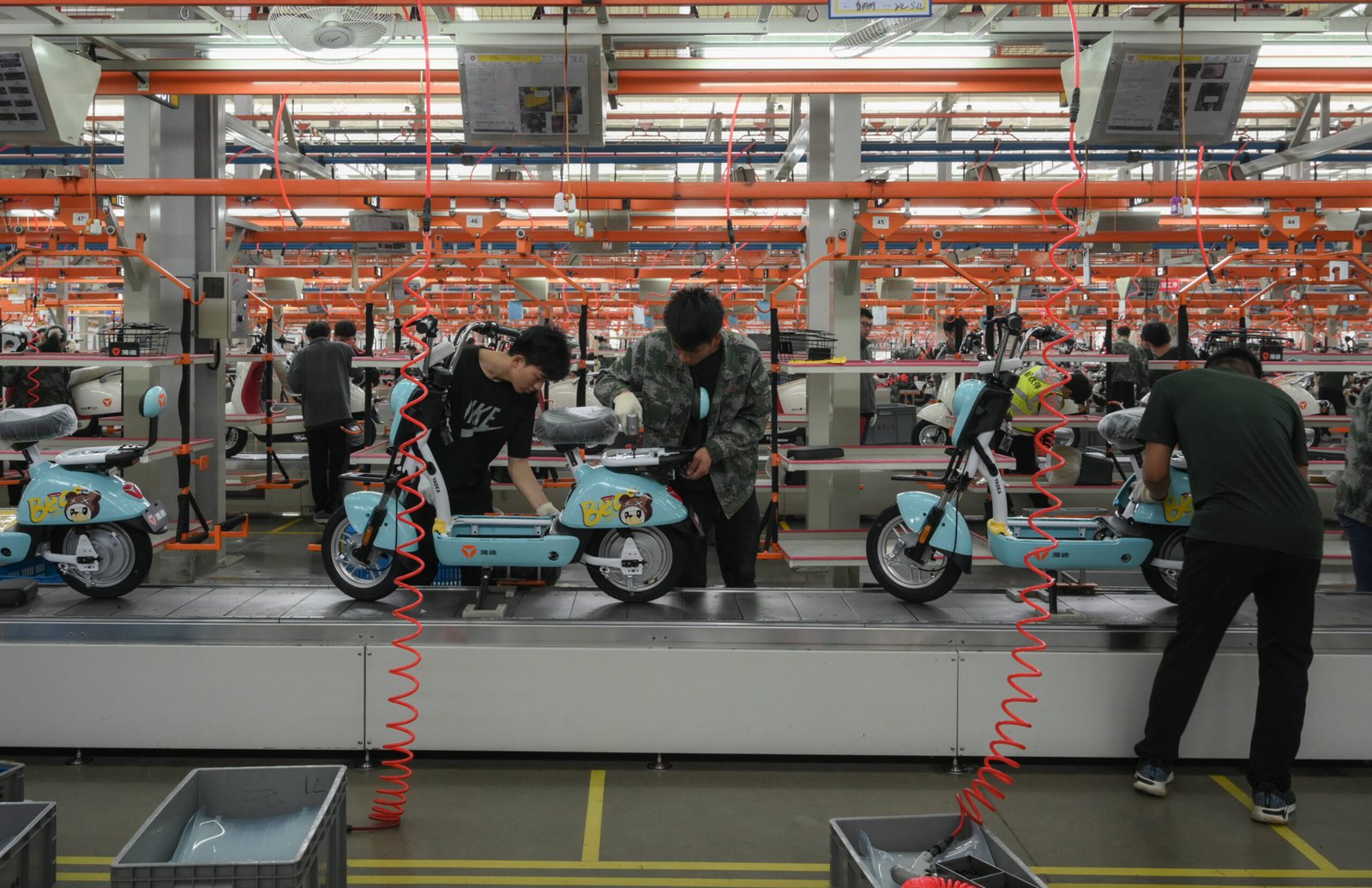
A two-wheel EV contains six core systems: welded frame, 400-1200 W hub motor with sine-wave controller, 48/60 V Li-ion pack protected by an active BMS, disc/drum brakes on aluminium rims, twin-tube suspension and foldable bar, plus IP67 harness, LED lamps and smart display. Assembly follows an 11-step automatic slat conveyor: parts are robot-welded, laser-cleaned, balanced, torque-controlled and on-line tested for HV, insulation and 25 km/h limit before weighing under 55 kg and palletising. Colour-coded looms, servo-torque logging and ≤30 min battery dock keep quality traceable and safe.
- Main Parts List (BOM) – Industry-Common Specification
(All brand names removed)
Level-1 System: Frame
- Main frame: high-strength carbon-steel or one-piece aluminium welded frame, includes head tube, main beam and rear swing-arm
- Rear rack / side cover: ABS or PP injection-moulded, snap-fit, colour part and paintable
Level-1 System: Power-train
- Hub motor: 48 V or 60 V 400-1 200 W brush-less DC hub motor, 10 or 12 inch (popular: 10 inch 800 W)
- Controller: 48 V or 60 V sine-wave vector type 15-35 A, with CAN or RS-485
Level-1 System: Energy Storage
- Battery pack: 48 V 20-38 Ah or 60 V 20-32 Ah Li-FePO₄ or NCM, certified to GB 38031
- Battery box: deep-drawn steel case plus silicone seal ring, IPX7
- BMS: 10-16 S 60 A active-balancing board, with UART or RS-485
Level-1 System: Wheel & Brake
- Wheel hub: aluminium one-piece die-cast, size 10×2.15 or 12×2.5, with bearing seats
- Tyre: tubeless 3.0-10 or 90/90-12, wear-resistant compound
- Brake: front Φ220 disc plus rear Φ180 disc (or drum), twin-piston caliper
Level-1 System: Suspension & Steering
- Front fork: hydraulic twin-tube, 60 mm travel, dust-sealed
- Rear shock: dual spring plus 5-step damping adjuster
- Handle bar: Φ28 mm aluminium one-piece, folding mechanism
Level-1 System: Bodywork
- Plastics: gloss ABS front shield, floor and side covers, ≥3-layer paint
- Lamps: LED head-light 12 W, rear/brake combo lamp, brightness ≥1 800 lm
Level-1 System: Harness
- Main loom: 0.5-2.5 mm² oxygen-free copper, flame-retardant PVC, connectors IP67
- Meter: 5-7 inch LCD or IPS smart display, shows SOC, trip, Bluetooth
- Sensors: Hall throttle, brake-cut, side-stand-cut, 25 km/h limit ring
Level-1 System: Accessories
- Saddle: high-density foam plus leather, spring-damped
- Stand: electro-plated steel, auto-retract
- Charger: 48 V or 60 V 2-5 A smart pulse, 3C certified
- Industry-Common Assembly Process (slat-conveyor automatic line)
Step 1 Incoming inspection
Sample test to GB/T 36972 for critical parts; barcode scan into MES.
Step 2 Frame pre-assembly
Robotic welding → weld NDT → shot-blast → electro-coat primer ≥20 µm.
Step 3 Frame on-line
RFID links order; install main cable, swing-arm, centre stand.
Step 4 Front wheel / fork sub-assembly
Auto press bearings & oil-seals → fit hub & tyre → dynamic balance ≤5 g; robot press fork into head tube 55 N·m.
Step 5 Rear wheel / motor sub-assembly
Stator heat-shrink → rotor fit → winding tests → one-piece hub press → tyre & disc → 100 % air-leak test.
Step 6 Battery pack (parallel cell line)
Auto grade cells → laser weld → BMS plug → HV test → close lid; AGV delivers to main line.
Step 7 “Big-three” integration
Robot locks battery box into seat bucket 18 N·m; mount controller → connect harness → servo drivers log torque.
Step 8 Covers & lamps
Auto screwdrivers fit shields, floor, side covers; plug head & tail lamps → light-on test.
Step 9 End-of-line adjustment
MES downloads parameters; auto align motor phase & Hall angle; roller bench checks no-load current, speed, brake force (≥220 N), light intensity; insulation, HV, ground, tamper-proof all OK.
Step 10 Final inspection
100 % cosmetic check → decals → weigh (e-bike ≤55 kg); rejects auto-route to repair island.
Step 11 Pack & ship
Auto fold handle-bar → waterproof bag → pallet → logistics label; OTA writes after-sale trace ID.
- Key Process Points (industry practice)
- 48 V / 60 V harness colour coding to avoid mix-up burn-out.
- Battery pack dock-to-line ≤30 min to reduce self-discharge spread.
- Critical torques (fork, hub, battery box) all servo-controlled, values uploaded to MES for recall.
- GB e-bike speed limit 25 km/h, tamper port lead-sealed, photo archived.
- Vehicle insulation ≥20 MΩ, leakage ≤0.2 mA or vehicle blocked from release.