
Declined Conveyor Power and Torque Calculator
Calculation Results
Total Tension:— N (Newton)
Net Torque:— N·m (Newton Meter)
Net Power:— W (Watt)
Torque with Safety Factor:— N·m (Newton Meter)
Power with Safety Factor:— W (Watt)
Core Functionality
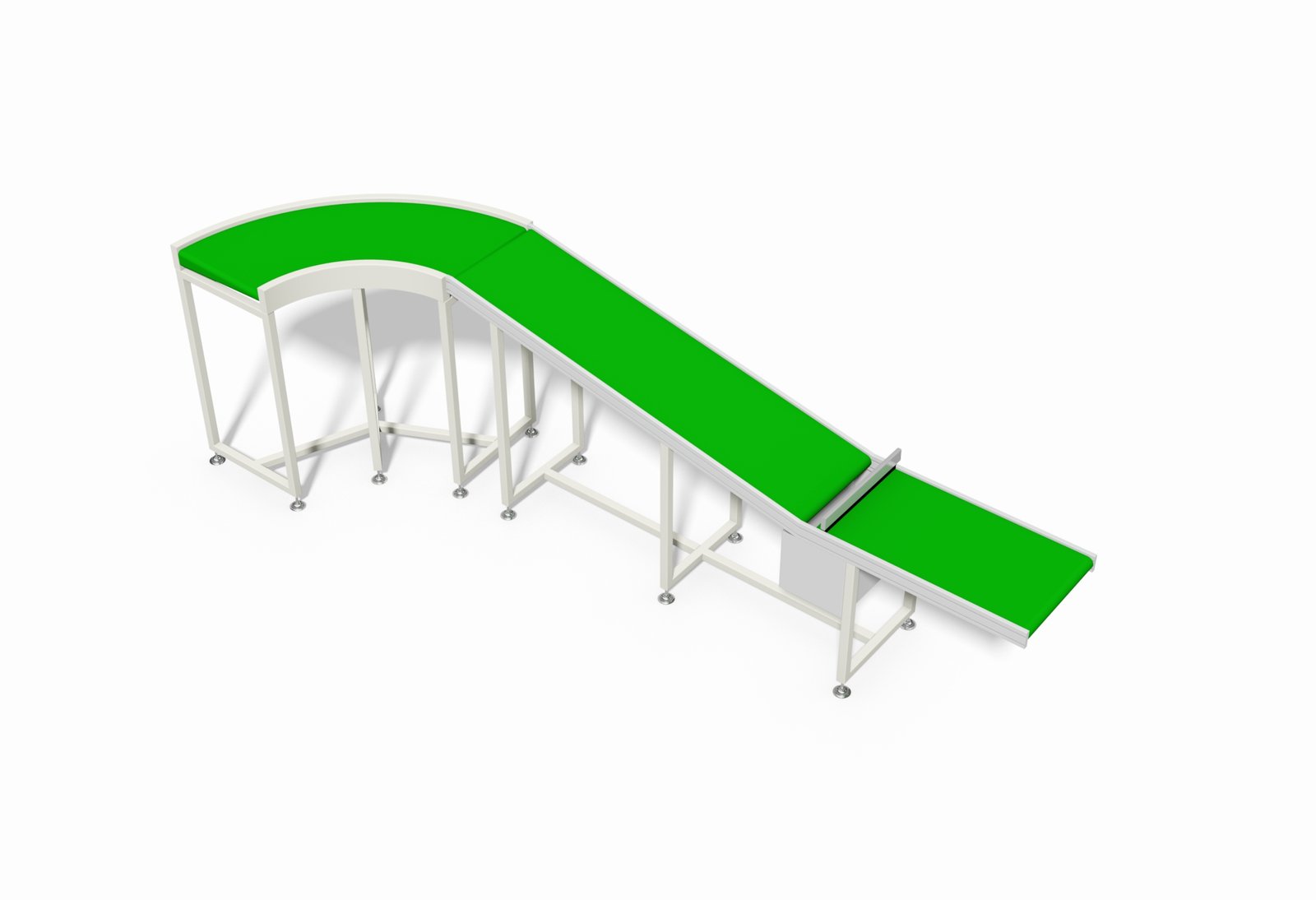
This calculator is specifically designed for declined (downward-inclined) conveyors. Based on core parameters including conveyor angle, length, self-weight, product quantity/weight, and friction coefficient, it automatically and accurately calculates the total tension, net torque, and net power required for conveyor operation, as well as torque and power values with the safety factor included. It provides critical data support for conveyor motor selection and transmission shaft design.
Core Features
- Downward Working Condition Adaptation: Adopts an absolute-value mechanical formula (|total mass friction resistance - product gravity assist|) to calculate total tension, accurately matching the physical characteristic where gravity changes from "resistance" to "assistance" in downward conveying, and covers tension calculation under all working conditions.
- High-Precision Calculation Guarantee: Uses the standard gravitational acceleration of 9.80665 throughout, retains 6-8 decimal places for trigonometric functions and intermediate calculations to avoid floating-point errors, resulting in calculation accuracy far superior to manual hand calculation.
- Engineering-Oriented Result Output: Final results are automatically rounded to integers, aligning with engineering design usage habits and directly reusable in practical scenarios such as motor selection and load verification.
Core Advantages
- Efficiency and Precision: Completes multiple complex mechanical calculations with one click and outputs results in less than 1 second, avoiding errors such as misremembered formulas and unit conversion mistakes common in manual calculation.
- Flexible Adaptability: Supports refined input of 9 core parameters (minimum step of 0.001), adaptable to downward conveyor scenarios of different specifications and inclination angles, with customizable safety factors.
- User-Friendly Operation: Features an intuitive interface with input prompts, eliminating the need to master complex mechanical formulas—even non-professionals can quickly get started. It is also compatible with multiple terminals including computers, tablets, and mobile phones.
- Proactive Risk Prevention: Built-in parameter verification mechanism provides instant reminders for invalid inputs, avoiding calculation failure caused by incorrect parameters and ensuring the reliability of design data.