Industrial robots, conveyor lines, and assembly lines
Industrial robots, conveyor lines and assembly lines are the core components of modern automated manufacturing systems, with distinct roles and close collaboration. Industrial robots are programmable devices for precise tasks like welding and assembly, while conveyor lines act as logistics links for continuous material transportation. Assembly lines integrate both into systematic production platforms, coordinating processes for efficient product assembly. Conveyor lines lay the logistics foundation, industrial robots enhance automation and precision, and assembly lines unify the entire workflow. Together, they boost production efficiency, ensure quality stability, and support large-scale standardized manufacturing in industries such as automotive and electronics.
Detailed Explanation of Industrial Robots, Conveyor Lines and Assembly Lines, with a Table and Their Interrelationships
1. Industrial Robots
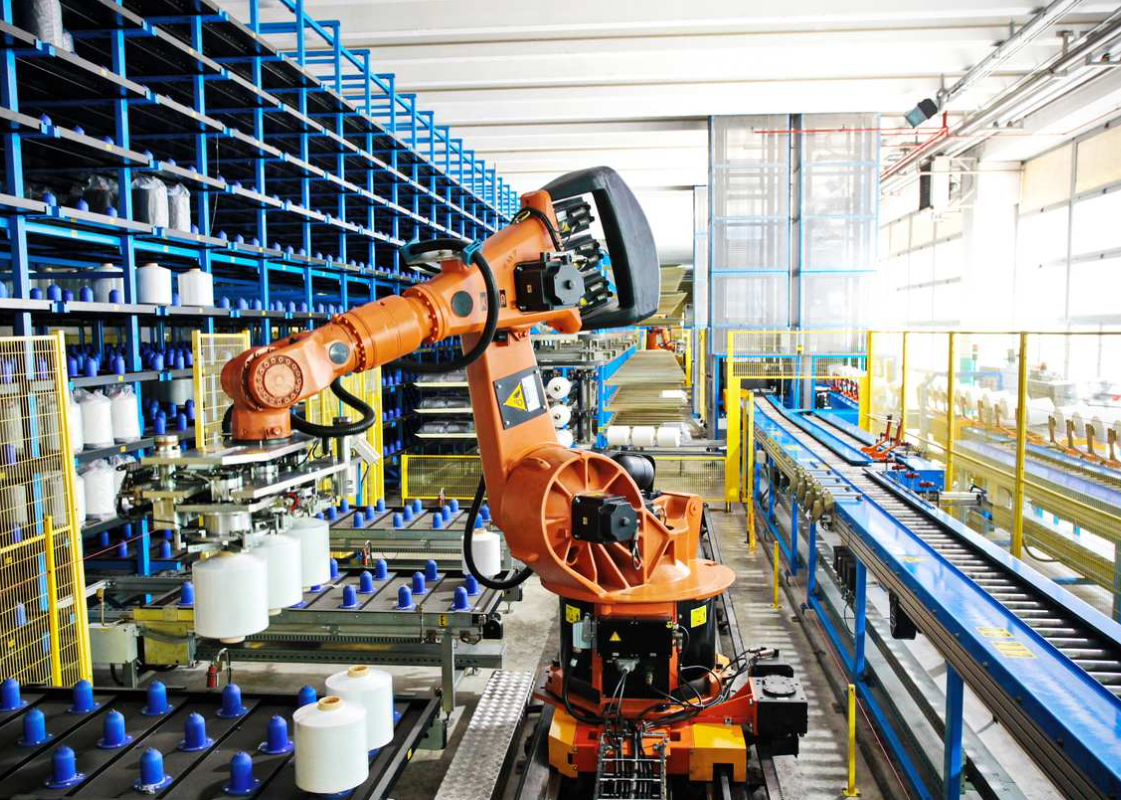
An industrial robot is a programmable, multi-degree-of-freedom automated device designed to replace humans in performing repetitive, precise, high-intensity, or high-risk tasks in industrial production. It typically consists of a robotic arm, control system, sensors, and actuators, featuring flexible movement capabilities and high positioning accuracy.
Core Characteristics: High programmability to adapt to different production tasks; excellent repeat positioning accuracy for stable product quality; strong continuous operation capacity to improve production efficiency; ability to work in harsh environments (such as high temperature, toxic, or high-pressure conditions) to ensure personnel safety.
Main Application Scenarios: Welding, painting, and material handling in automobile manufacturing; precision assembly and parts sorting in the electronics industry; cargo palletizing and handling in the logistics field, etc.
2. Conveyor Lines
Also known as flow lines, conveyor lines are automated equipment used for continuous transportation of materials, workpieces, or finished products. They realize directional and quantitative material transportation through mechanical transmission systems (such as belts, rollers, and chains), serving as the “logistics link” connecting various production processes.
Core Characteristics: High continuity for uninterrupted material transportation; high transportation efficiency suitable for large-scale production; customizable to select different types according to production sites and material characteristics; reduction of manual handling costs and material losses.
Main Types and Applications: Belt conveyor lines are suitable for light materials (e.g., electronic parts); roller conveyor lines for heavy goods (e.g., auto parts); chain conveyor lines for high-temperature and heavy-load scenarios (e.g., transportation of forging parts).
3. Assembly Lines
An assembly line is a systematic production organization form that breaks down the product assembly process into multiple ordered processes. Through division of labor, cooperation, and process optimization, it achieves efficient product assembly. It usually integrates conveying equipment, workstations, tooling fixtures, and auxiliary equipment, forming an integrated production system.
Core Characteristics: Reasonable process breakdown to achieve specialized operations; controllable production rhythm to ensure stable capacity; high integration degree suitable for complex product assembly; flexible mode combining automation and manual collaboration.
Main Application Scenarios: Automobile assembly, home appliance (e.g., refrigerators, washing machines) assembly, and electronic product (e.g., mobile phones, computers) assembly, etc.
Core Comparison Table of the Three
| Comparison Dimensions | Industrial Robots | Conveyor Lines | Assembly Lines |
|---|---|---|---|
| Core Positioning | Automated equipment for specific operations | Logistics link for material transportation | Systematic production organization form |
| Core Functions | Welding, assembly, handling, sorting, etc. | Directional and continuous transportation of materials/workpieces | Step-by-step product assembly and process control |
| Structural Characteristics | Standalone equipment with independent operation capability | Linear/ring-shaped transmission system without operation capability | Integrated system combining conveying, workstations, and equipment |
| Flexibility | High, task-switchable via programming | Medium, type needs customization based on materials | Low, difficult to make major adjustments once finalized |
| Core Advantages | High precision and strong adaptability | High transportation efficiency and low cost | Streamlined operations and stable capacity |
| Independent Operation Capability | Can independently complete specific tasks | Cannot independently complete production tasks | Requires integration of equipment/personnel to operate |
Interrelationships Among the Three
Industrial robots, conveyor lines, and assembly lines are core components of automated production systems in modern manufacturing. They are interdependent and cooperate synergistically to build an efficient and precise production process. The specific relationships can be divided into the following three levels:
1. Conveyor Lines as the Foundation: The “Logistics Skeleton” Connecting Processes
Conveyor lines are a core part of assembly lines and also the material guarantee for industrial robot operations. In assembly lines, conveyor lines carry workpieces to flow orderly between various workstations, ensuring each process receives required materials on time. For industrial robots, conveyor lines accurately transport materials to the robot’s operating range, enabling the robot to efficiently complete tasks such as grasping and processing. They serve as the “logistics foundation” of the entire production process.
2. Industrial Robots as the Enhancement: The “Automation Core” Strengthening Operations
As a functional extension of assembly lines and conveyor lines, industrial robots replace humans in performing precise and high-intensity operations in assembly lines (such as precision part assembly and bolt tightening). They can also cooperate with conveyor lines to realize automatic material sorting, loading, and unloading, greatly improving the automation level and production efficiency of assembly lines. An assembly line without industrial robots relies heavily on manual labor for core operations, making it difficult to guarantee efficiency and accuracy. Industrial robots separated from conveyor lines require manual material handling, failing to achieve continuous operations.
3. Assembly Lines as the Integration: The Systematic “Production Carrier”
Assembly lines are integrated platforms for industrial robots and conveyor lines, organically combining the two to form a complete production process. For example, in an automobile assembly line, conveyor lines transport vehicle bodies to each workstation in sequence, and industrial robots complete tasks such as welding, gluing, and part assembly at corresponding workstations, ultimately realizing the assembly of entire vehicles. Through process design, assembly lines coordinate the operating rhythm of industrial robots with the transportation speed of conveyor lines, ensuring seamless connection of various processes and achieving large-scale and standardized production.
In simple terms: conveyor lines are responsible for “transporting”, industrial robots for “operating”, and assembly lines for “integrating”. The three together form the core system of automated production in modern manufacturing, and none can be dispensed with.