
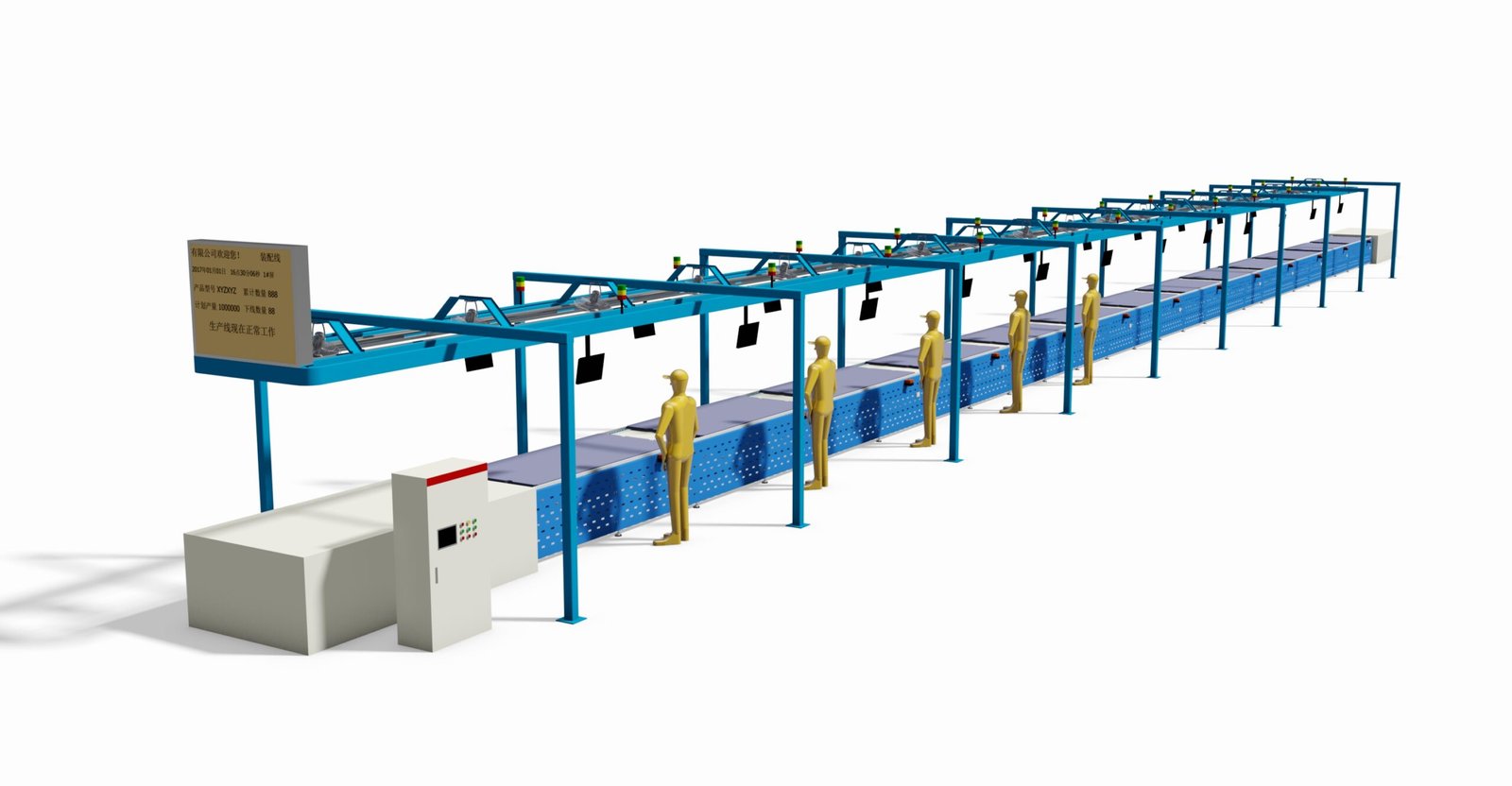
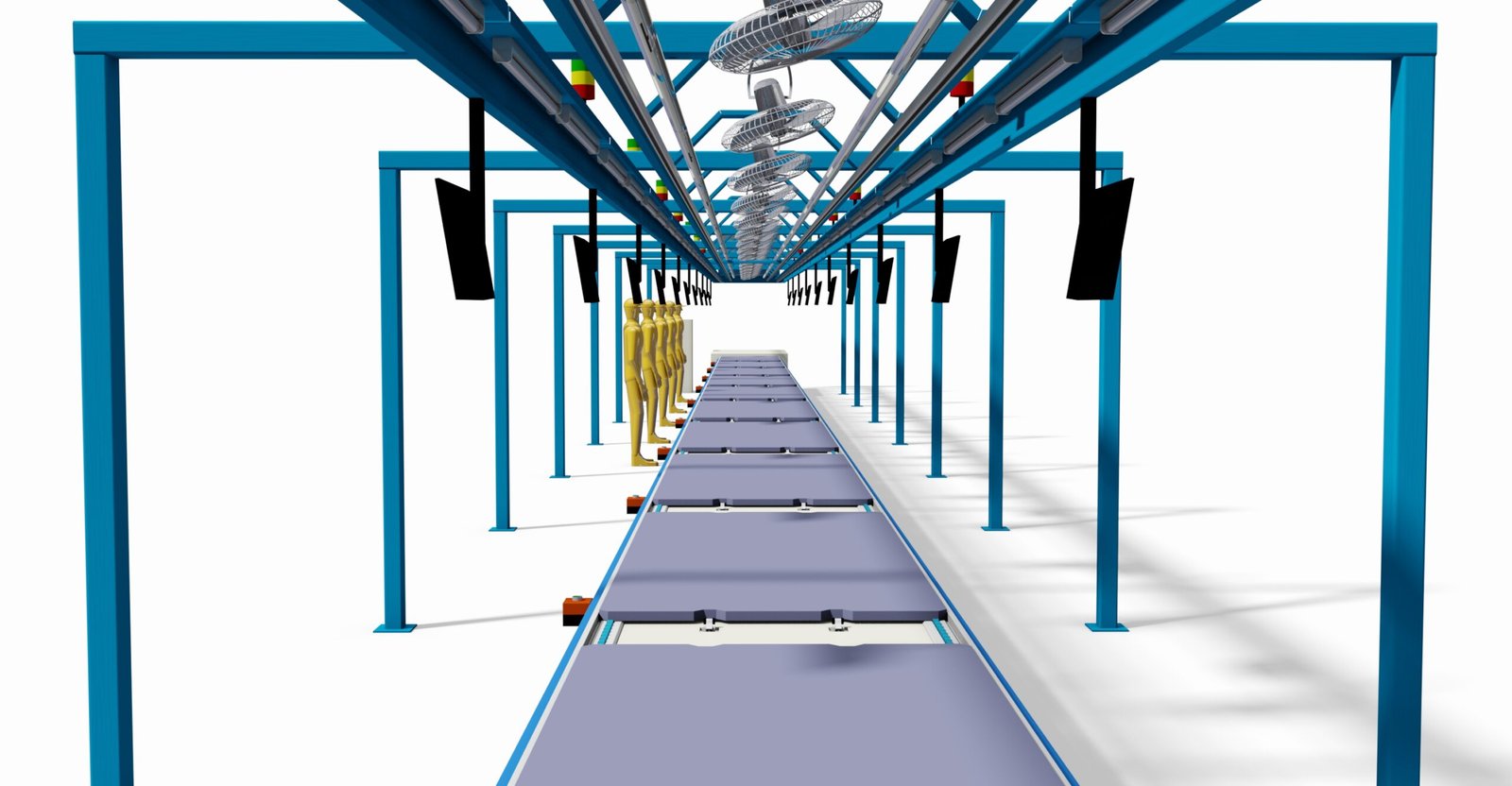
The duplex (upper-lower) speed-chain conveyor for assembly is a double-deck system that uses the upper level for assembly work and the lower level for empty pallet/fixture return. Pallets circulate with the help of lifting/transfer units at both ends, offering paced, flexible, high-load and space-saving operation. It is widely used in automated assembly lines for automotive parts, 3C electronics, household appliances and new-energy batteries.
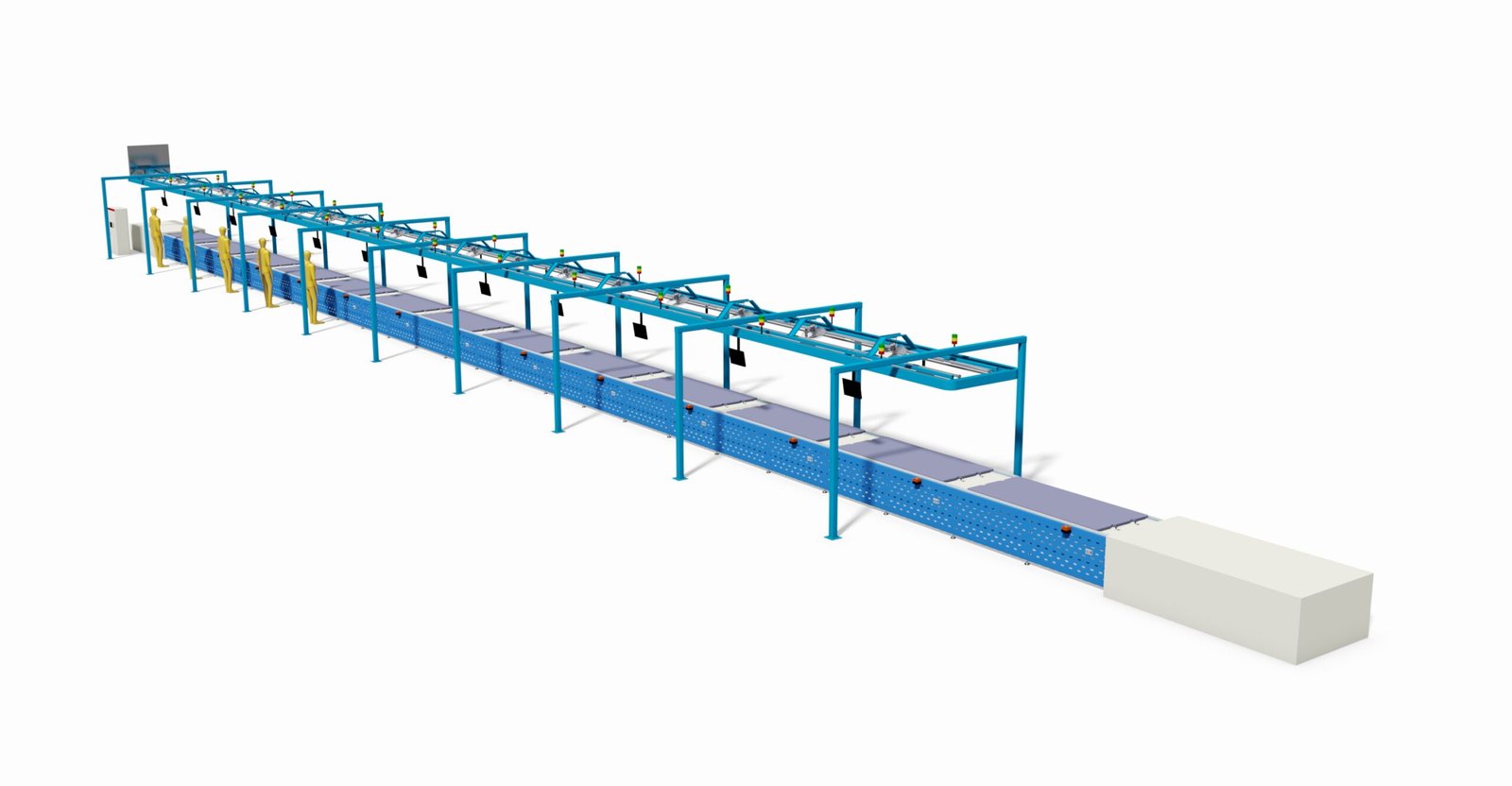
- Typical structure
- Upper level: 3× (or 2.5×) speed chain running on aluminium-profile guides, carrying the main “assembly + inspection” process. Workstations can be equipped with stoppers, lift-and-locate, rotation, screw-driving, pressing, etc.
- Lower level: same-size speed-chain or slat conveyor for fast return of empty pallets; speed is usually 10–30 % higher than the upper level to shorten the cycle.
- Pallet lift/transfer at both ends: 200–1000 mm lift stroke, driven by chain/belt + gear-motor, guided by linear rails and lifted by pneumatic or servo cylinder, enabling 90° or straight layer change.
- Frame: 40×40 / 40×80 aluminium profiles or welded 60×60 / 80×80 square-steel tubing; lower deck 400–600 mm above floor, upper deck 850–950 mm (ergonomic standing height); line width 250–900 mm as required.
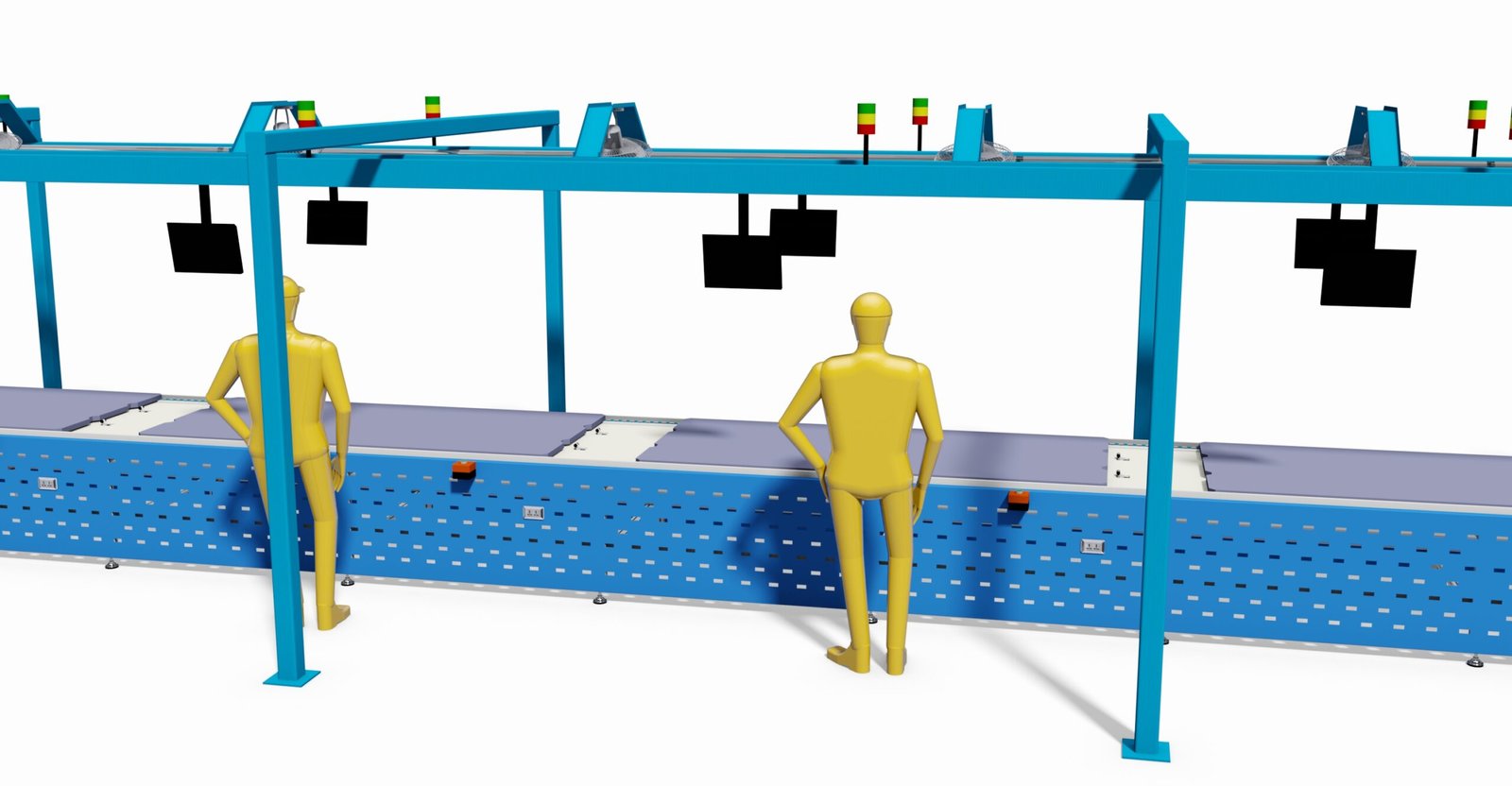
- Control: PLC + inverter + photo/limit switches; each workstation can be fitted with foot switch, power socket, quick-connect air, LED lighting and process board, allowing one-key change between free- and fixed-pitch modes.
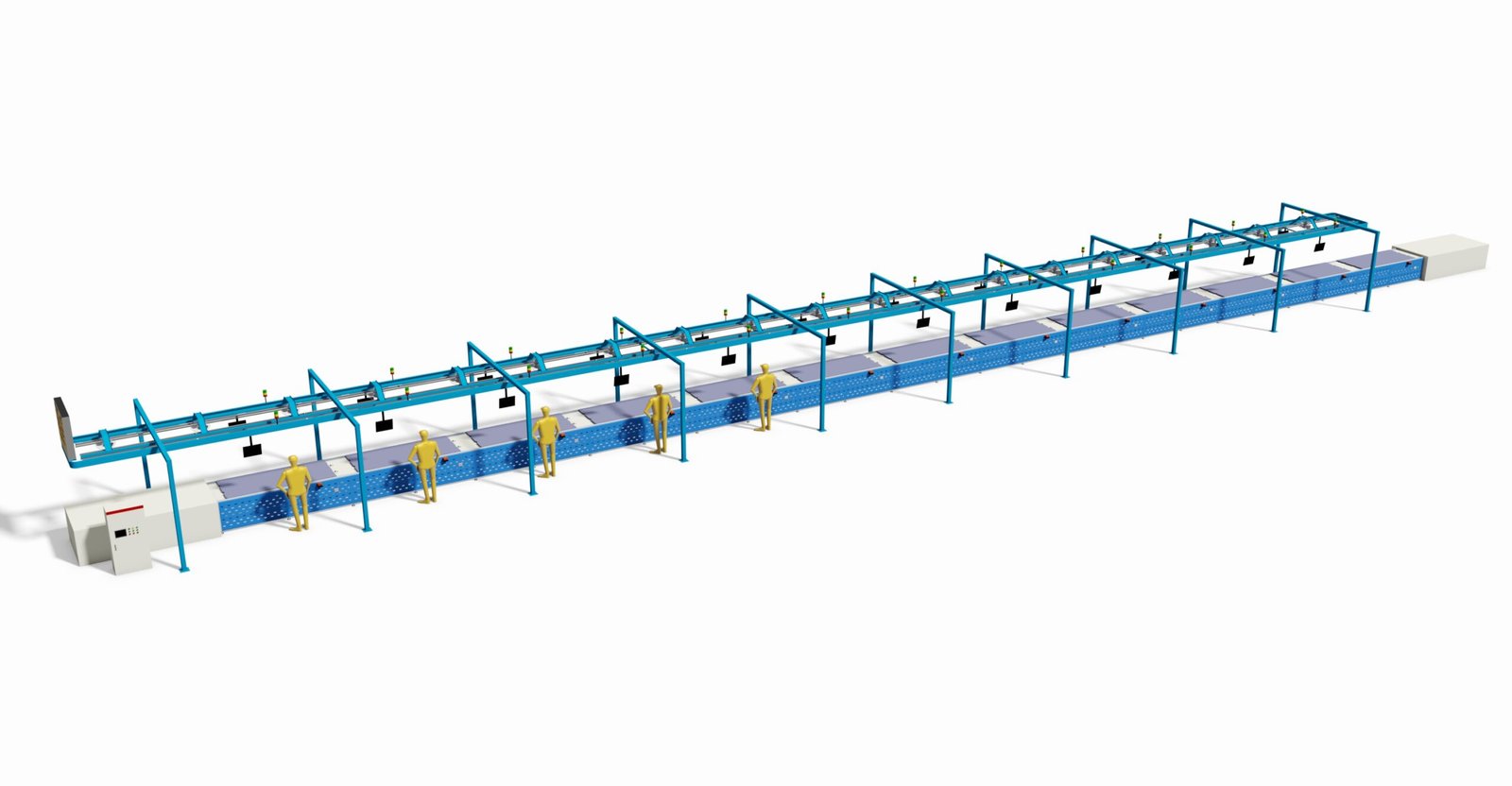
- Key specifications
- Speed multiplication: most common are 2.5× and 3×; at 3× the pallet moves ≈ three times the chain speed.
- Pallet load: 50 kg (small 3C parts) to 500 kg (automotive sub-frames, Li-ion modules); heavy-duty lower frames made of carbon-steel profiles reach 2 t·m⁻¹.
- Conveyor speed: chain 5–15 m min⁻¹, pallet 15–45 m min⁻¹, stepless by inverter.
- Positioning accuracy: stopper + dead-end or lift-and-pin, repeatability ≤ ±0.5 mm, meeting automatic tightening, pressing and vision requirements.
- Cycle time: 15–60 s per station adjustable; whole-line capacity 60–600 JPH (jobs per hour) by adding/removing stations or running parallel twin chains.
- Functional modules (plug-and-play)
- Lift-and-rotate: 90°/180° indexing for multi-sided assembly.
- Lift-and-transfer: lateral movement to parallel inspection or rework spur.
- Right-angle transfer: 90° in-plane turn for compact “racetrack” or U-shape layout.
- Mid-line elevator: besides end return, can drop from double deck to single deck for manual loading or offline scanning.
- ESD protection: aluminium frame + braided copper ground; pallet surface with graphene conductive layer, point-to-point resistance 10⁶–10⁹ Ω, meets IEC 61340-5-1.
- Informatisation: RFID / 2D code on pallet ID, linked to MES; assembly data, tightening curves and test results travel with the pallet.
- Application examples
- Automotive oil-pump line: 18-station duplex 3× chain; housing, rotor, impeller and end-cover pressed in sequence; servo lifts at both ends return pallets; output 450 pcs/shift, yield 99.5 %.
- New-energy battery module: upper 2.5× chain + servo locate; 12 modules of 50 kg per pallet; robot tightens 24 M8 bolts at 25 N·m ±3 %; lower slat conveyor returns fixtures; takt 38 s.
- 3C phone main-board: ESD duplex line, 400 mm wide, 20 boards per pallet; vision inspection + shielded-box test; model change-over cut from 2 h to 15 min.
- Maintenance highlights
- Chain sag ≤ 2 % of span (L); inspect weekly and re-grease with high-temp lithium soap.
- Clean rollers and wear strips monthly to remove aluminium chips and keep rollers turning (essential for speed multiplication).
- Check lift belts/chains tension, linear-guide bellows and buffers every quarter.
- Motor surface ΔT ≤ 60 °C; stopper cylinders 0.4–0.6 MPa; drain filter bowl daily.
With this upper-lower speed-chain solution, “assembly + return” is integrated into one closed loop without extra floor space, saving more than 30 % labour and raising line-balancing rate by 15–25 %. It is one of the most economical and easily expandable conveyor types for medium-volume assembly of small-to-medium parts.