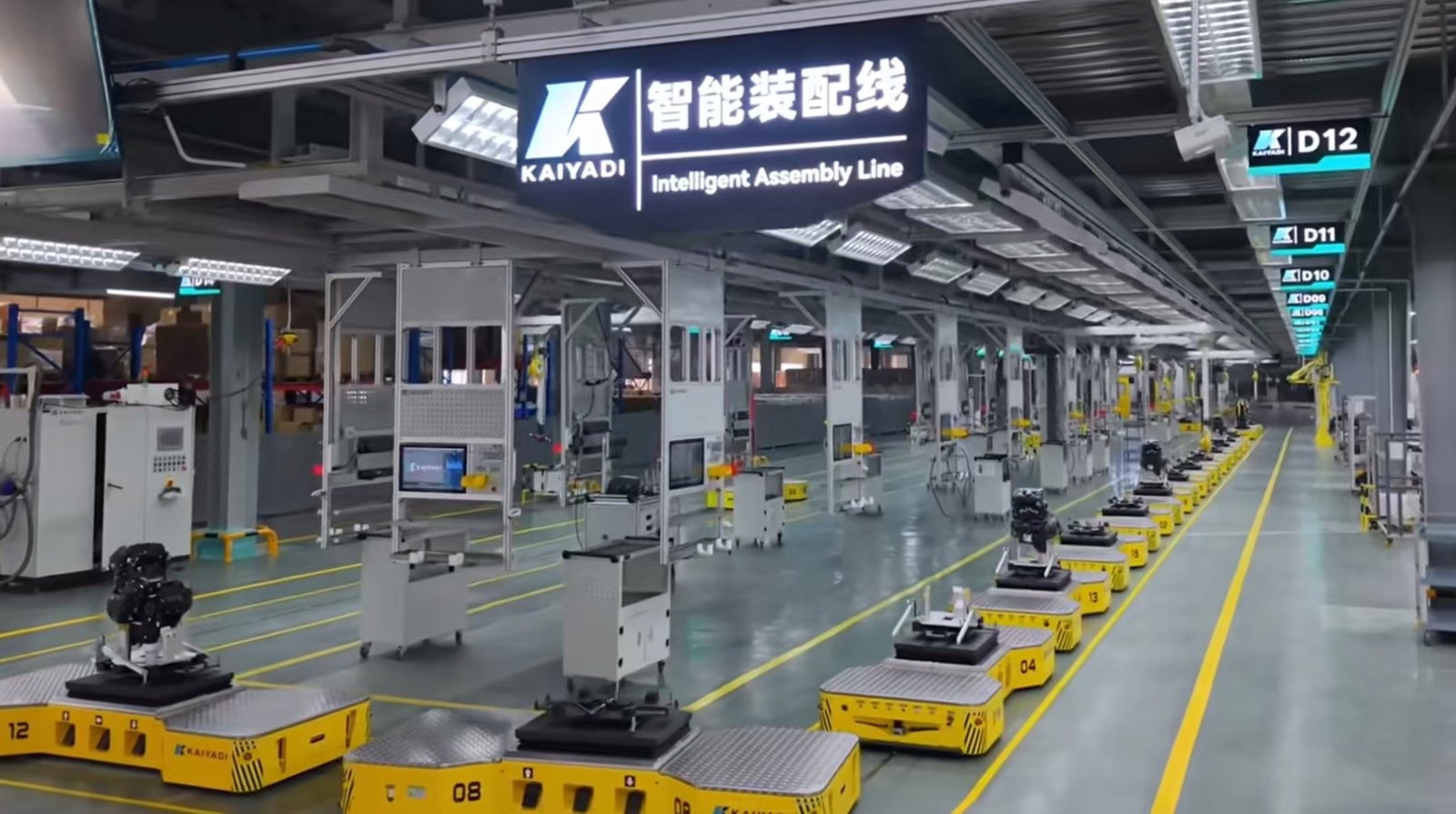
Overview of AGV Motorcycle Assembly Line
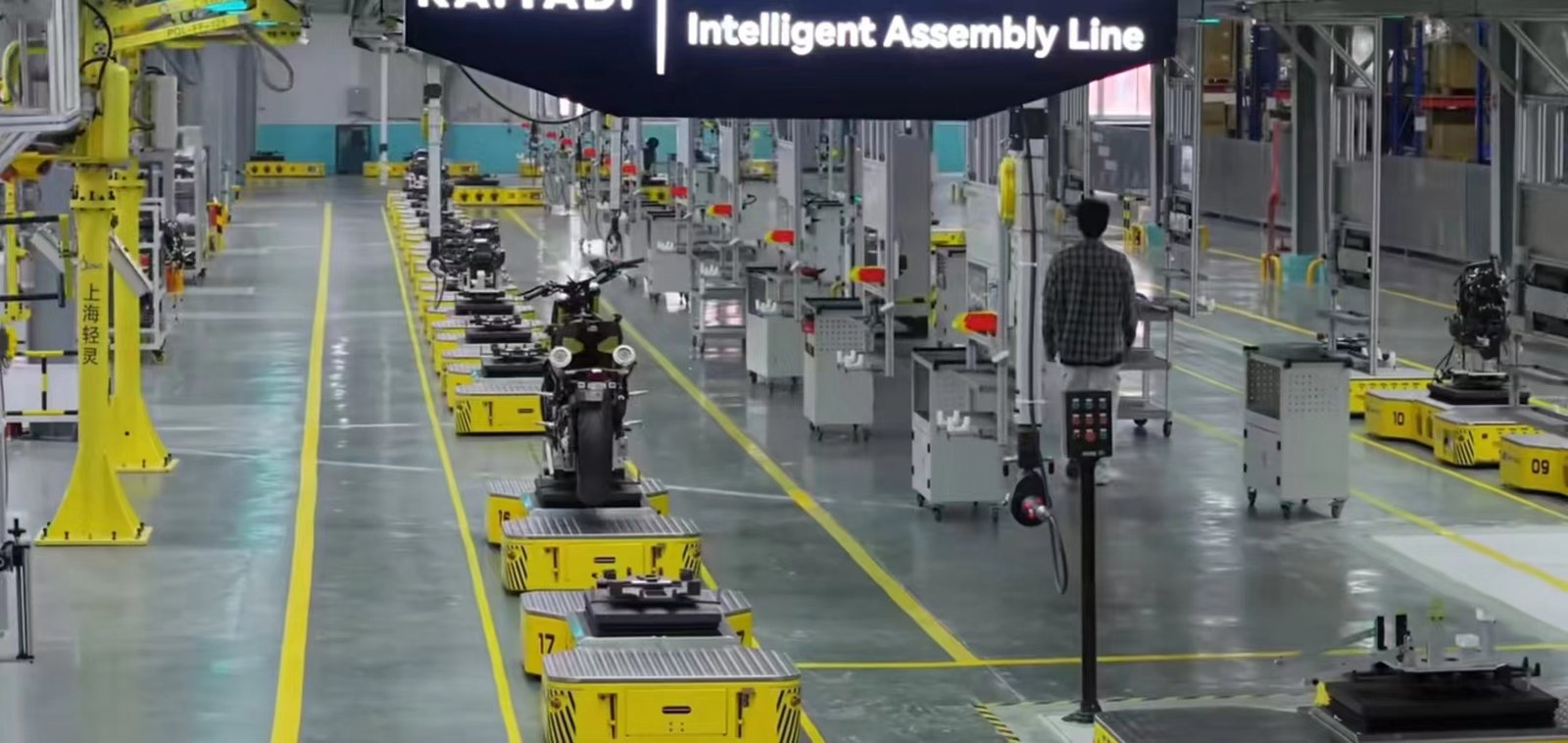
AGV (Automated Guided Vehicle) motorcycle assembly line is a flexible assembly system based on mobile robot technology. AGV carts serve as both assembly carriers and transportation tools, replacing traditional fixed conveyor chains or slat conveyors.
Core Characteristics
| Characteristic | Description |
|---|---|
| Flexible Layout | No fixed tracks required; line layout can be adjusted flexibly according to capacity needs |
| Modular Design | Each AGV operates independently; workstation quantities can be quickly increased or decreased |
| Intelligent Scheduling | AGV path optimization and task allocation through MES/WMS systems |
| Human-Machine Collaboration | AGVs automatically dock at workstations; workers operate standing still without moving with the line |
| Data Traceability | Each AGV binds to a unique vehicle frame, recording assembly data throughout the process |
Main Advantages
1. High Flexibility
- Line layout can be quickly adjusted with product changes (U-shaped, L-shaped, linear, etc.)
- Supports mixed-line production of multiple models with quick model switching
- Capacity expansion only requires adding AGV units without civil construction modifications
2. Improved Assembly Quality
- Smooth AGV operation reduces workpiece collision
- Precise positioning (±10mm) ensures assembly accuracy
- Independent control of operation time at each workstation prevents “rushed work”
3. Enhanced Working Environment
- Workers operate at fixed points without walking or moving with the line
- Reduced labor intensity and fatigue
- Adjustable workstation height (ergonomic compliance)
4. Intelligent Management
- Real-time production data collection (takt time, quality, equipment status)
- Automatic anomaly alerts supporting predictive maintenance
- Seamless integration with ERP/MES systems
5. Investment Flexibility
- Initial investment can be staged according to capacity
- Equipment is reusable with low relocation costs
Comparison with Traditional Assembly Lines
| Comparison Dimension | Traditional Assembly Line (Slat/Chain Type) | AGV Assembly Line |
|---|---|---|
| Line Layout | Fixed tracks, difficult to modify | Flexible layout, adjustable anytime |
| Product Adaptability | Dedicated equipment, high changeover costs | Mixed-line production, quick model change |
| Capacity Adjustment | Requires line modification, long cycle | Add/remove AGVs, completed in days |
| Floor Space | Requires continuous long strip | Can utilize irregular space, more compact |
| Initial Investment | Large one-time line investment | Staged investment, less capital pressure |
| Operating Costs | Fixed energy consumption, complex maintenance | On-demand scheduling, energy saving |
| Informatization | Difficult data collection | Naturally digital, fully traceable |
| Worker Experience | Must walk with line or stand waiting | Fixed-point comfortable operation |
| Fault Impact | Single point failure stops entire line | Single AGV failure doesn’t affect overall operation |
Typical Application Scenarios
AGV assembly lines are particularly suitable for:
- Multi-variety small-batch production (custom motorcycles, high-end models)
- Capacity ramp-up period (initial uncertainty about final capacity)
- Old factory renovation (space constraints preventing traditional line layout)
- Export-oriented enterprises (need to respond quickly to order changes)
Summary
AGV motorcycle assembly lines represent an important direction for the motorcycle manufacturing industry toward flexibility, intelligence, and humanization. Compared to traditional assembly lines, their core advantage lies in breaking rigid constraints, enabling production lines to be flexibly combined like “Lego blocks” to better adapt to rapid changes in market demand.