
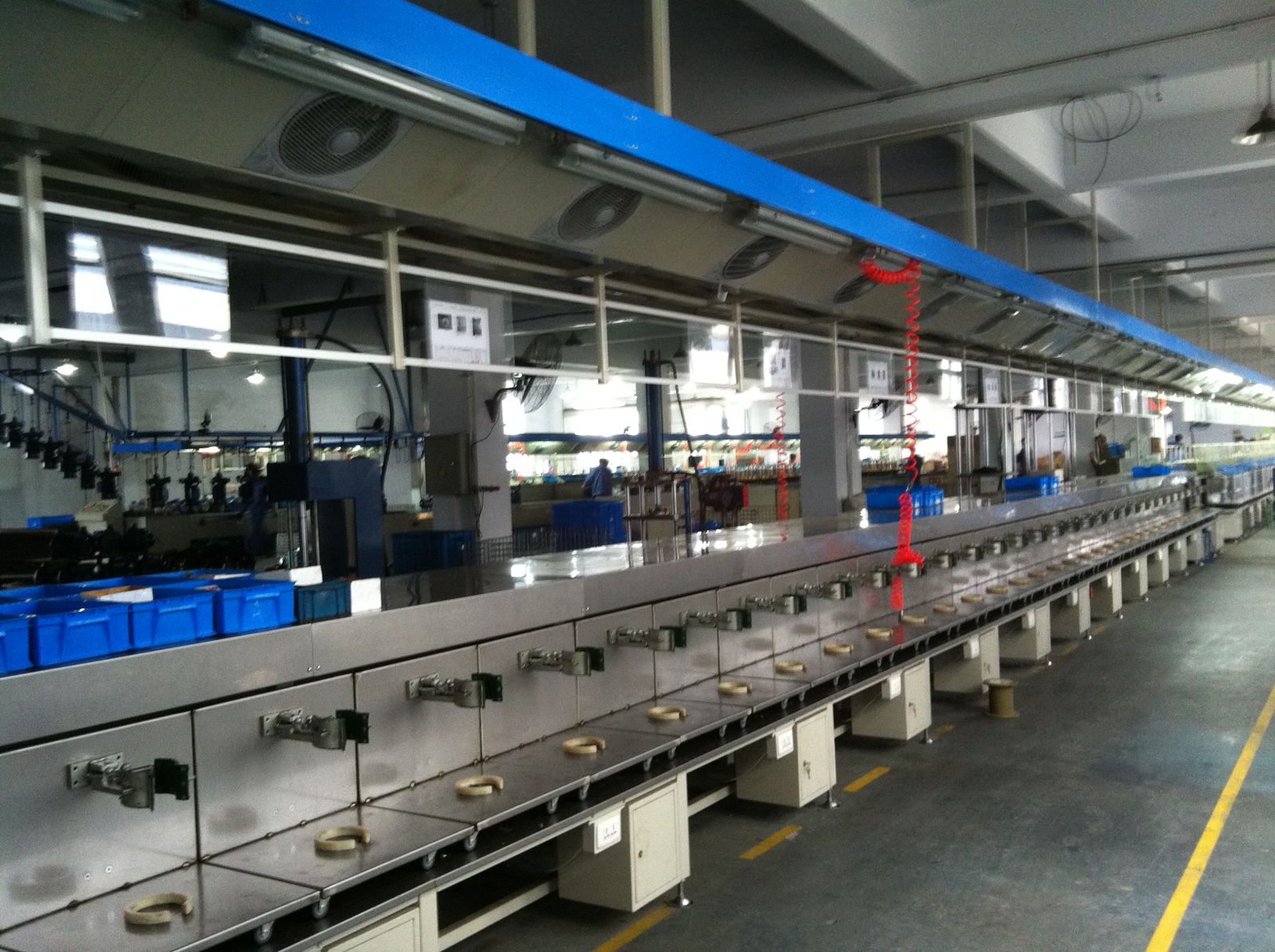
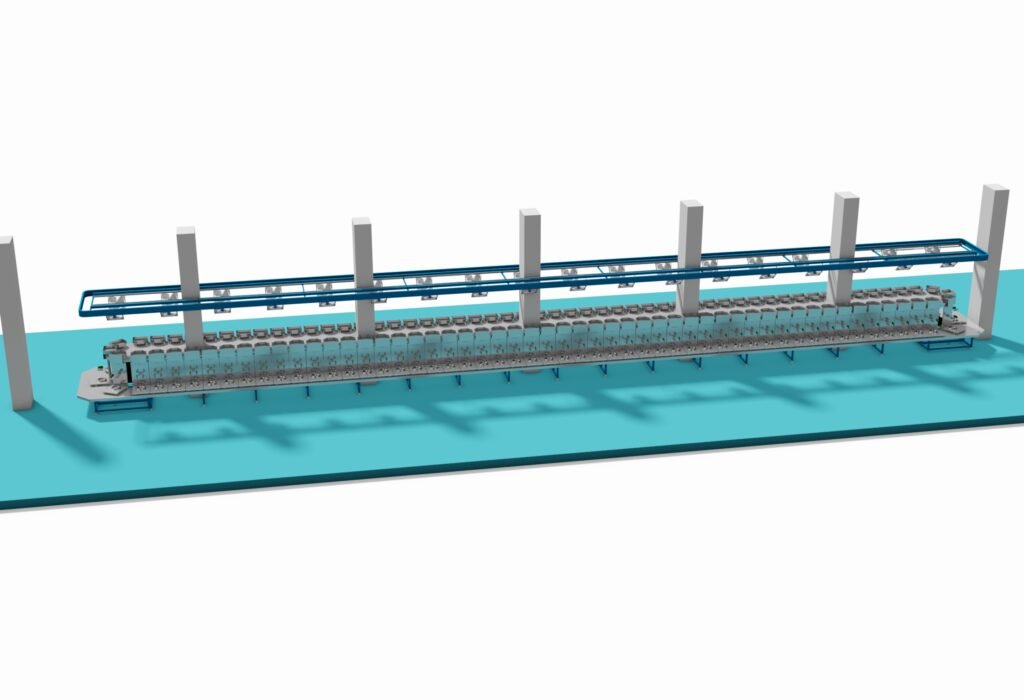
Assembly line manufacturing of stainless steel deep-well pump motors delivers transformative advantages across productivity, quality, cost efficiency, and sustainability. Through automation, standardization, and digital integration, manufacturers achieve rapid production cycles, consistent product quality, and reduced operational costs while meeting stringent reliability requirements for submersible applications. This modern production approach represents the core manufacturing methodology for ensuring long-term operational stability in critical water supply infrastructure.
I. Significant Improvement in Production Efficiency
1. Standardized Production Takt Time
Assembly line production achieves high efficiency through precise process decomposition and takt time control. For example, the overall takt time of an automated water pump motor stator production line can reach ≤22 seconds/unit, producing ≥1500 stators in 10 hours, which is several times more efficient than traditional manual assembly.
2. Continuous Operation Capability
Assembly lines support 24-hour uninterrupted production, avoiding the waiting time between processes and material handling time losses inherent in traditional production models. Intelligent stainless steel deep-well pump assembly lines can achieve an annual production capacity of 200,000 sets.
3. Quick Changeover Capability
Modern assembly lines are equipped with flexible manufacturing systems that can adapt to different product specifications through rapid die changeovers, reducing equipment idle time.
II. Significant Enhancement of Product Quality Stability
1. Process Consistency Assurance
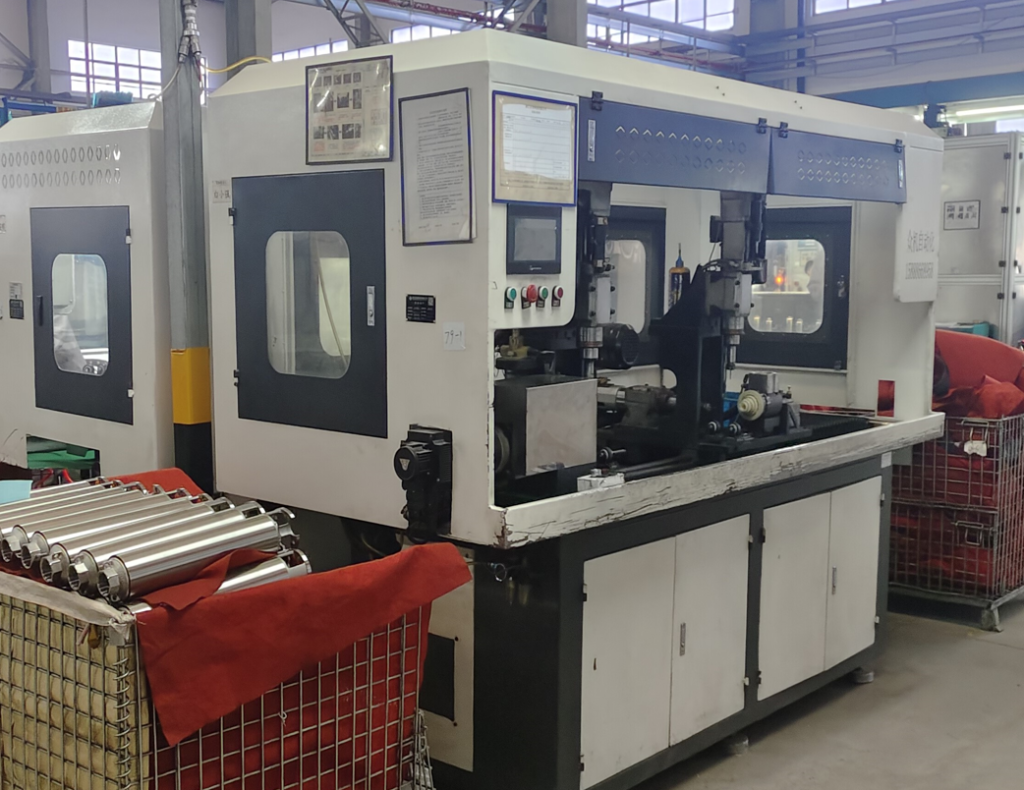
Assembly lines eliminate human operational variations through automated equipment and standardized operating procedures. After adopting motor assembly production lines, 100% inspection mode can be implemented to strictly control product quality, significantly improving quality stability.
2. Precise Control of Critical Processes
- Sealing Performance: Deep-well pump motors must operate submerged in water for extended periods, requiring extremely high sealing standards. Assembly lines can precisely control the installation pressure and position of mechanical seals and oil seals, ensuring IP68 waterproof rating.
- Winding Insulation: Automated winding and coil insertion equipment ensures consistency in coil turns, wire diameter, and tension, improving motor insulation performance and service life.
- Stainless Steel Welding: Automatic welding equipment on assembly lines ensures uniform weld seams without porosity, avoiding issues such as incomplete penetration and uneven welds common in manual welding.
3. Full Quality Traceability
Assembly lines integrate sensors and vision inspection systems for real-time monitoring and data recording at each workstation, achieving full-process quality control traceability. Each pump leaving the factory can undergo 72-hour load testing, IP68 waterproof certification, and vibration/noise testing.
III. Effective Reduction of Production Costs
1. Labor Cost Optimization
Automated assembly lines significantly reduce dependence on skilled workers. Water pump motor stator production lines feature lower labor costs and higher production efficiency, with simple operation and reduced reliance on manual labor.
2. Improved Material Utilization
Assembly lines reduce stainless steel material waste through precise cutting and assembly control. Additionally, automated cutting and processing equipment improves raw material utilization rates.
3. Optimized Energy Consumption Management
Assembly lines can integrate energy management systems to intelligently regulate motor testing, heating, and other processes, reducing energy costs per unit product.
4. Reduced Inventory Costs
Assembly line production supports Just-in-Time (JIT) production models, reducing work-in-process and finished goods inventory backlogs. Through advanced assembly lines, routine products can be maintained in warehouse stock to shorten delivery cycles.
IV. Continuous Innovation in Technical Processes
1. Digital Production Management
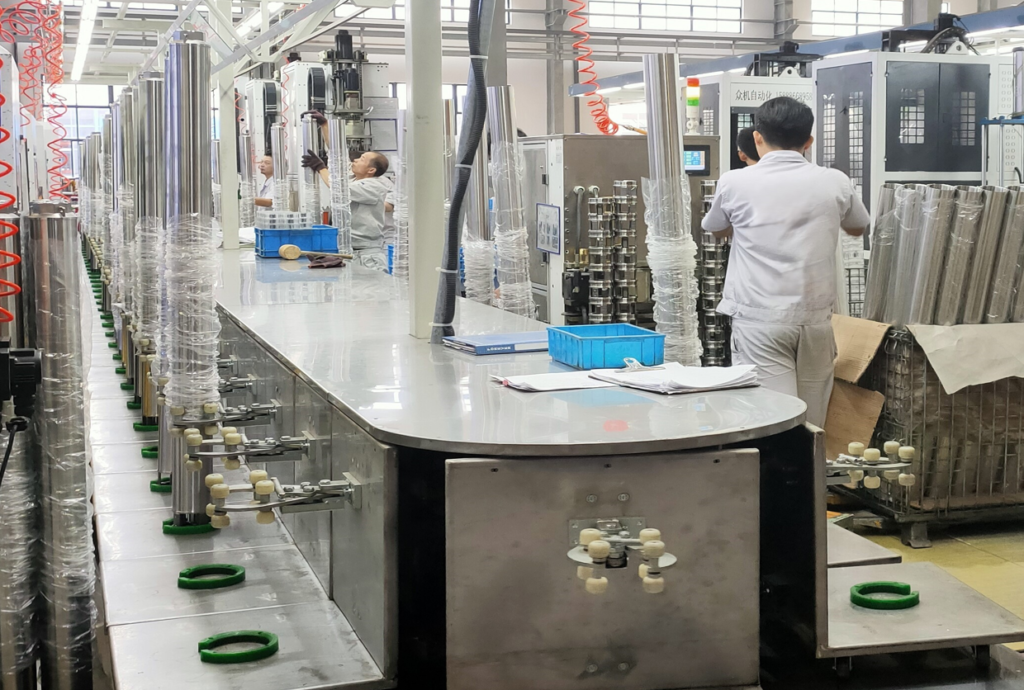
Modern assembly lines are equipped with MES (Manufacturing Execution Systems) for real-time data collection and analysis. A digital deep-well pump motor production line includes pre-assembly stations, stator stations, automatic oil chamber pressing stations, drive shaft alignment stations, and electrical testing stations, achieving full-process digital control.
2. Breakthroughs in Critical Processes
- Epoxy Resin Potting Process: Assembly lines precisely control heating temperature and time, injecting epoxy resin in three stages to encapsulate stator windings, significantly improving motor waterproof performance.
- Automatic Hydraulic Expansion: Self-developed fully automatic hydraulic expansion equipment ensures airtightness and strength of stainless steel pipe connections.
- Motor Winding Automation: Fully automatic motor winding assembly lines improve the precision and efficiency of winding manufacturing.
3. Flexible Manufacturing Capability
Assembly lines can accommodate products of different power ratings (e.g., 2.2kW to 22kW) and different well depth requirements (20-200 meter head).
V. Safety and Reliability Assurance
1. Enhanced Structural Strength
Motor casings, bearing housings, and other critical components produced on assembly lines feature high dimensional accuracy and tight fit, capable of withstanding high-pressure environments in deep wells. Stainless steel materials (304/316) combined with precision manufacturing processes can achieve product lifespans of over 10 years.
2. Multiple Protection Mechanisms
Assembly lines can integrate automatic inspection stations to ensure each motor is equipped with:
- Thermal protection elements (preventing overheating)
- Float switches (monitoring water leakage)
- Oil-water probes (monitoring seal condition)
- Overload protection devices
3. Sand and Corrosion Prevention Design
Through standardized assembly of sand preventers and shielding sleeves on assembly lines, sand ingress into motors is effectively prevented, adapting to sandy water environments.
VI. Environmental Protection and Sustainable Development
1. Clean Production
Assembly lines are equipped with dust and fume removal equipment, reducing dust pollution during stainless steel processing. Additionally, optimized cutting fluid circulation systems reduce chemical waste emissions.
2. Energy Efficiency Improvement
Motors produced on assembly lines, through precise electromagnetic parameter design and assembly processes, can achieve energy efficiency 8% higher than industry standards, meeting national energy conservation and consumption reduction policy requirements.
3. Material Recyclability
Stainless steel materials are 100% recyclable and reusable. Assembly line production reduces waste generation, aligning with circular economy principles.
Summary
The adoption of assembly line manufacturing for stainless steel deep-well pump motors, through automation, standardization, and digitization, achieves full-process optimization from raw material processing to finished product testing. This not only significantly improves production efficiency and product quality stability but also substantially reduces manufacturing costs while driving technological progress and green manufacturing development in the industry. For products like deep-well pump motors that have extremely high reliability requirements, assembly line production is the core manufacturing model to ensure their long-term stable operation and meet the demands of critical applications such as agricultural irrigation, urban water supply, and industrial water use.