Conveying Line with Double-Speed Chain for Electro-Mechanical Product Assembly
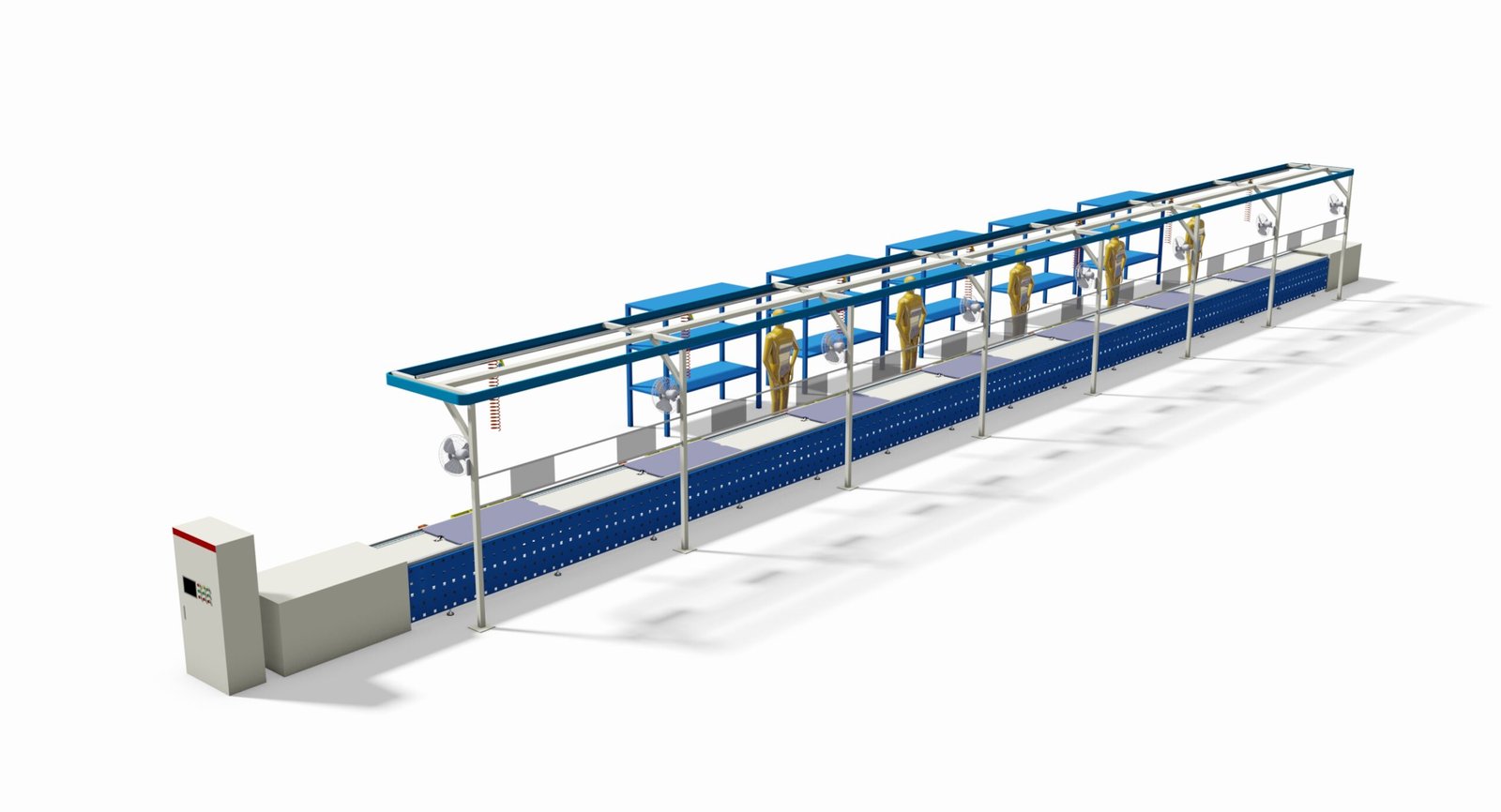
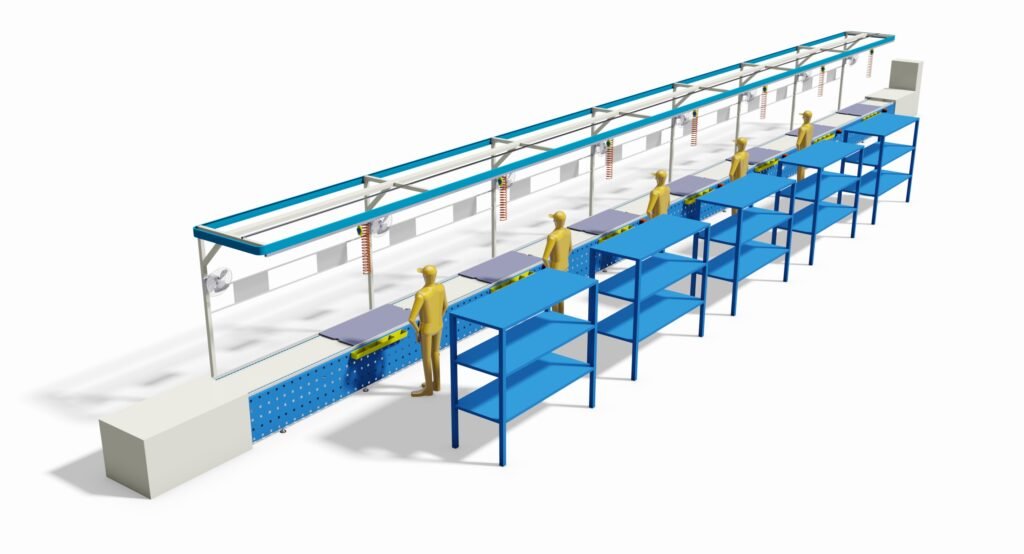
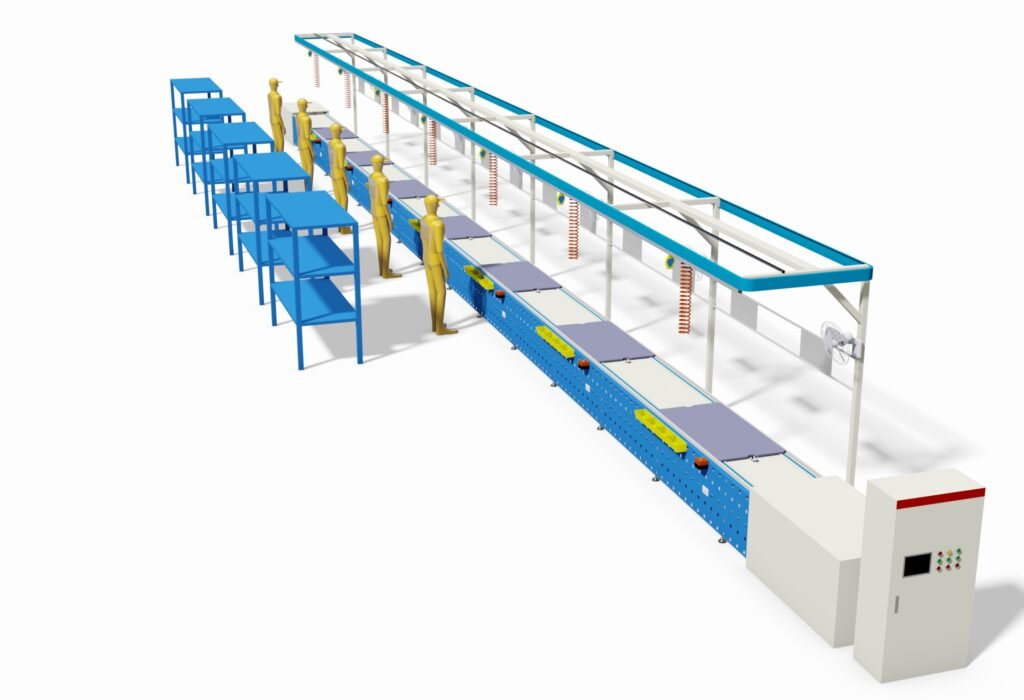
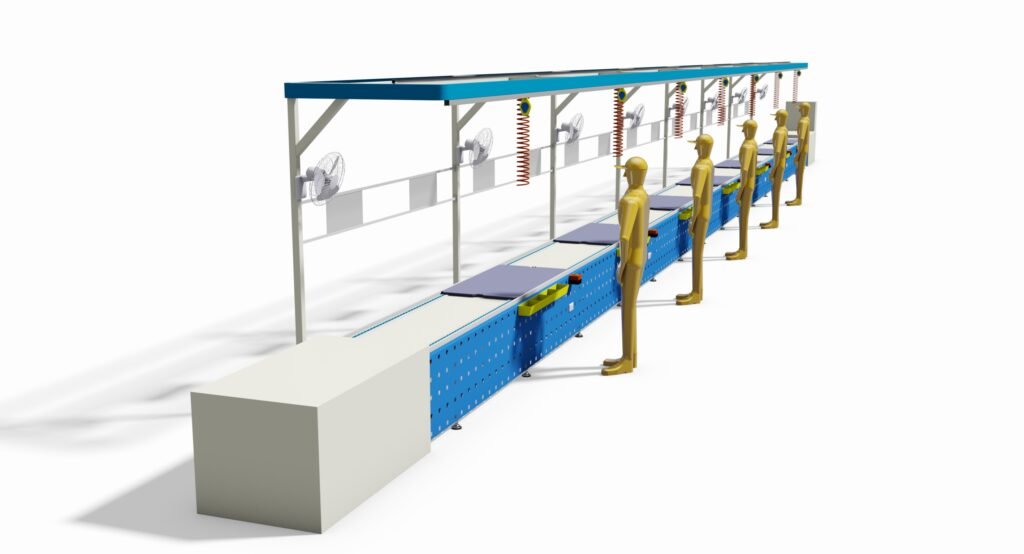
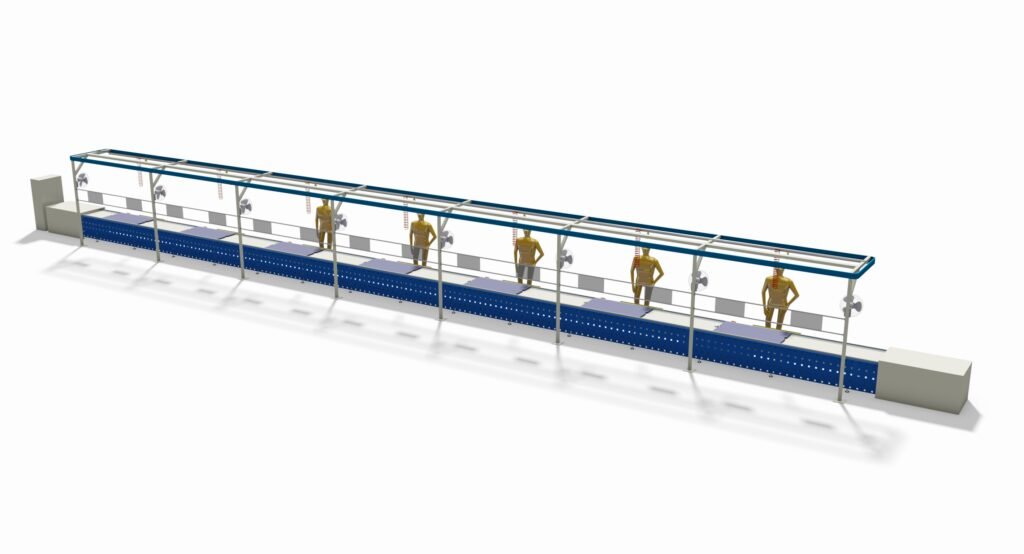
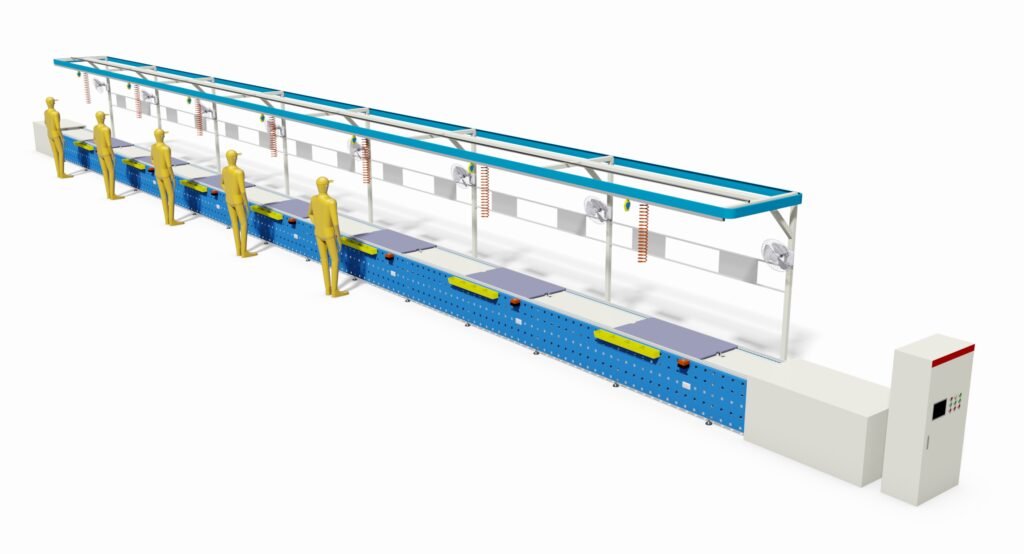
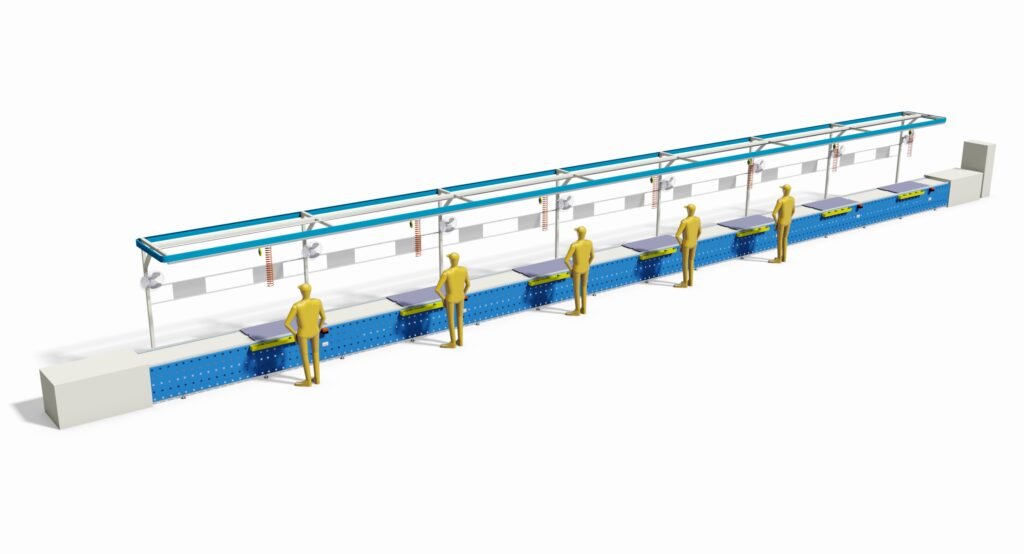
A double-speed chain conveyor line (also called a differential-speed chain or free-flow conveying system) is a material-handling device specially designed for product assembly and machining stages, and is widely used in the assembly of electro-mechanical products. Its main advantages and typical applications are summarized below.
1. Structure and Working Principle
- Traction element: uses double-pitch roller chain or differential chain (2.5×/3× speed). The chain runs continuously while the workpiece sits on a fixture pallet.
- Speed control: the chain moves at a constant speed, but the pallet can be stopped or accumulated accurately at any station by a stopper, achieving a “fast flow–precise stop” rhythm that satisfies multi-process synchronous assembly.
- Line specifications: width 250–900 mm, height 500–1000 mm, single-drive length up to 30–40 m; conveying speed 2–20 m/min, variable-frequency adjustable.
2. Typical Layout for Electro-Mechanical Assembly
- Station flexibility: pallets can be transferred freely, lifted & shifted laterally, rotated or transitioned, allowing easy loading of stators, rotors, control boxes and other parts that need multi-side operations.
- Powered testing: conductive wheels are built into the line and copper bars are laid on the pallet, so assembly, on-line debugging and high-pot testing can be finished in one pass, eliminating secondary handling.
- 3-D circulation: combined with lift-transfers, lift-rotators, elevators or robots to form “racetrack” or “crossed” loops, achieving automatic empty-pallet return and one-way product flow, ideal for continuous batch production.
3. Key Advantages
- High load capacity: aluminum alloy guide + steel frame, single-station load ≥ 50 kg, meeting heavy electro-mechanical products such as motors, pumps and gearboxes.
- Accurate synchronization: differential chain has small pitch error; with servo-positioning stoppers, repeat stop accuracy ±0.5 mm, suitable for automatic screw-driving, bearing pressing and other precision operations.
- Flexible expansion: modular sections can be added or removed at any time; only the fixture pallet needs to be changed for model change-over, supporting mixed-model, small-lot production.
- Environmental adaptability: stable in high temperature or dusty conditions; noise ≤ 65 dB, meeting industrial environmental requirements.
4. Real-World Examples
- Engine assembly line: 3× differential chain, 28 stations complete cylinder block pre-assembly, piston-connecting rod mounting, cylinder-head marriage, cold test and leak test; takt 90 s/unit, output 320 pcs/shift.
- Servo-motor line: racetrack loop + lift-rotate; stator hot-press → rotor balancing → encoder mounting → on-line hi-pot, all in one flow; first-pass yield up 7 %.
- Industrial valve line: heavy-duty double-speed chain (thickened chain plate) carries 30 kg valve body; torque-wrench special machines enable automatic flange alignment and bolt tightening; output rises from 120 to 200 pcs/shift.
5. Selection and Implementation Guidelines
| Parameter | Recommended Range / Remarks |
|---|---|
| Line takt | design at bottleneck time × 1.2 |
| Pallet material | steel plate + Ni plating for heavy loads; engineering plastic for light loads |
| Stopper type | vertical cam stopper for light, horizontal hydraulic buffer for heavy |
| Drive arrangement | 0.75–2.2 kW gear-motor + VFD, chain speed matched to throughput |
| Control system | PLC + HMI, with MES / ANDON interface ready for later digitization |
Conclusion
Double-speed chain lines combine “high-speed flow, precise stop, heavy load” in one package. Through modular design and integration of special machines, they can complete the full sequence of assembly–test–pack for electro-mechanical products in a single pass, making them an ideal solution for boosting capacity, ensuring assembly quality and achieving flexible manufacturing.